

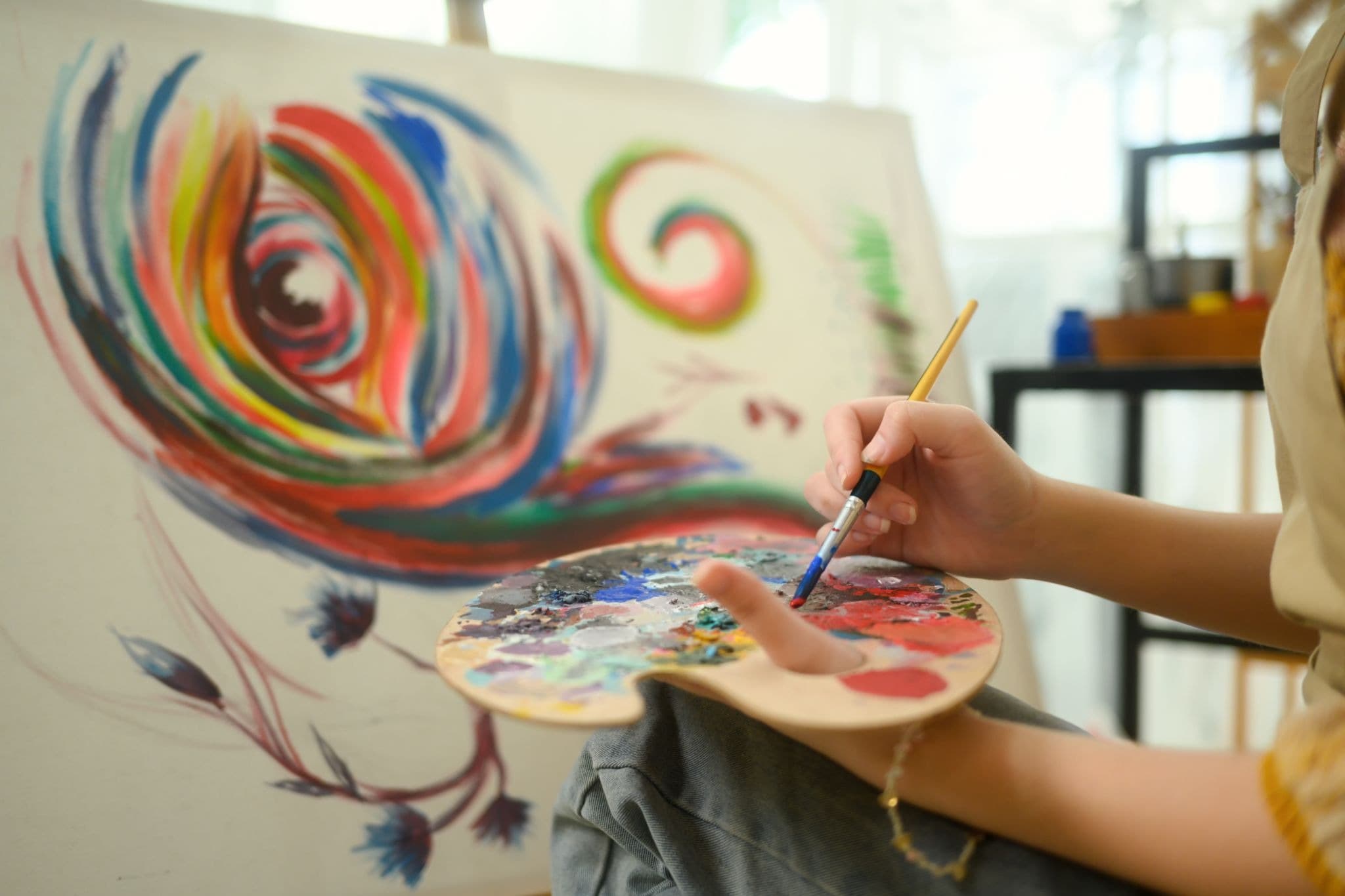
A blank canvas can feel uncertain. There is no map, no guarantee that the first mark will be right, and no way to know exactly what the finished picture will become.
Recovery can feel much the same.
At Lifeline Rehabilitation Center, we believe that uncertainty does not have to be feared. It can be the beginning of something new. Through painting, mixed media, writing, music, movement, and other forms of creative expression, individuals can explore what they have experienced and begin imagining what life could look like next.
Art therapy for addiction is not an art class or a test of talent. It is an opportunity to communicate, reflect, and create meaning. For someone who has struggled to explain grief, trauma, shame, anger, or hope, the creative process can offer a different place to begin.
That is why creativity is not an extra at Lifeline. It is part of how we help people reconnect with themselves while building practical skills for lasting recovery.
What Is Art Therapy for Addiction?
Art therapy combines art-making with therapeutic reflection. It may use drawing, painting, collage, clay, visual journaling, or mixed media to help an individual explore emotions, experiences, relationships, and behavioral patterns.
The American Art Therapy Association describes formal art therapy as a mental health profession that brings together active art-making, the creative process, psychological theory, and a therapeutic relationship.
In addiction treatment, art can provide a visual language for experiences that may be hard to express through conversation alone. A participant might create an image of a trigger, build a collage around recovery goals, or use colors and shapes to represent emotions that do not yet have names.
The purpose is not to interpret every color or symbol. It is to become curious about what emerged and what it may reveal.
A simple question such as “What do you notice about your artwork?” can open the door to a deeper conversation about fear, identity, relationships, stress, or the future.
Why Creativity Matters at Lifeline Rehabilitation Center
At Lifeline, creativity is at the heart of our treatment philosophy.
Our Tempe programs blend trusted clinical approaches with expressive modalities because people do not all heal in the same way. One individual may experience a breakthrough during cognitive behavioral therapy. Another may first recognize an important feeling while painting, writing, listening to music, or participating in a group expression workshop.

Often, these experiences work together.
An image created during art therapy may reveal a thought pattern to explore through CBT. The frustration of working with an unfamiliar material may become an opportunity to practice distress-tolerance skills from DBT. A visual recovery map can strengthen relapse-prevention planning. Artwork about family relationships may create a starting point for counseling.
This is what makes creative care meaningful at Lifeline. Art is not separated from the rest of treatment. It can become a bridge between insight and action.
Our creative and wellness modalities include:
- Painting and mixed media
- Music and songwriting
- Writing and journaling
- Group expression workshops
- Yoga and breathwork
- Mindfulness and meditation
Together with individual counseling, group therapy, trauma-focused care, CBT, DBT, family support, and relapse prevention, these experiences give each person more than one way to process, connect, and grow.
What Happens in the Brain When We Make Art?
The brain science surrounding art is still developing, and researchers are careful not to claim that creating art can cure addiction. Still, emerging findings help explain why creative work can feel calming, absorbing, and personally meaningful.
Art-Making May Help Reduce the Body’s Stress Response
In a small Drexel University study, 39 healthy adults spent 45 minutes making art with materials such as markers, paper, clay, and collage supplies.
Researchers measured cortisol, a hormone involved in the body’s stress response, before and after the activity. Cortisol levels decreased in approximately 75 percent of participants. Previous art experience did not significantly affect the results.
The study was small, involved healthy adults, and did not examine addiction treatment outcomes. It should not be treated as proof that art therapy reduces cravings or prevents relapse. However, it offers an interesting biological window into something many people experience personally: becoming absorbed in a creative activity can feel calming.
Stress management matters during recovery. Stress can affect sleep, emotional regulation, decision-making, and vulnerability to triggers. Art therapy can become one healthy way to slow down, focus attention, and make room for difficult feelings.
Creating Art Engages Multiple Brain Systems
Making visual art is not a single brain activity. It asks the brain to coordinate attention, memory, movement, planning, perception, decision-making, and emotion.
Even a simple collage involves choices. Which images feel important? What should be placed together? What belongs in the center? What feels finished?
Neuroimaging research suggests that planning visual artwork involves communication among multiple brain networks rather than one isolated “creative center.” Studies have also observed changes in functional brain connectivity following periods of visual art production.
These findings do not prove that art reverses changes associated with addiction. They do help show why art-making can be such a rich therapeutic activity. The process invites people to practice attention, flexibility, problem-solving, and self-reflection at the same time.
Visual Art Can Engage Reward-Related Regions
Research on viewing visual art has found activity in the ventral striatum, a region associated with reward processing. Addiction also involves the brain’s reward and learning systems, but this does not mean art simply replaces the effects of drugs or alcohol.
The more useful takeaway is that the brain can respond to meaningful experiences that do not involve substances. Creativity, connection, movement, music, accomplishment, and personal growth can all become parts of a life that feels rewarding again.
Recovery is not only about removing a harmful behavior. It is also about building sources of meaning, interest, and satisfaction that make continued recovery worth protecting.
You Do Not Need to Be an Artist
One of the most important things to understand about art therapy for addiction is that artistic skill is not required.
In fact, worrying about whether a piece looks “good” can distract from the experience. A few colors, torn pieces of paper, words from a magazine, or marks on a page may communicate something important.
The Drexel stress study also found no significant difference in cortisol outcomes based on participants’ previous art-making experience. The finding came from a small sample, but it reinforces a central idea in expressive therapy: participation matters more than expertise.
At Lifeline, the goal is not to create artists. It is to help individuals discover additional ways to understand themselves, cope with emotions, and build a life in recovery.
What Can Art Reveal That Words Might Miss?
Substance use often becomes connected to emotions and experiences that are difficult to discuss directly. Some people have spent years avoiding certain feelings. Others may know that something is wrong but cannot explain it.
Art can make an internal experience visible.
A person might draw addiction as a locked room and recovery as an open landscape. Someone else might use a tangled collection of dark lines to represent anxiety. Another person may create two self-portraits, one showing how others see them and another showing how they feel inside.
The artwork does not need to provide an immediate answer. Sometimes its value is in helping a person ask a more honest question.
Art therapy prompts in addiction recovery might include:
- Create an image of what recovery means to you.
- Use colors and shapes to show how a craving feels.
- Make a collage of the people, values, and activities that support you.
- Draw a boundary you need to establish.
- Create a picture of the person you were, the person you are, and the person you hope to become.
- Represent something you want to release and something you want to carry forward.
- Design a visual map of your triggers and coping strategies.
These exercises can create natural openings for individual therapy, group discussion, or private reflection.
Art Therapy and Trauma-Informed Care
For some people, substance use developed partly as a way to cope with trauma, loss, anxiety, or emotional pain. Asking someone to immediately explain every detail of those experiences may feel overwhelming.
Creative expression can provide a gentler entry point. A participant can approach difficult material through symbols, colors, textures, and metaphor without having to tell the entire story at once.
That sense of choice is important.
Trauma-informed care emphasizes emotional safety, trust, collaboration, and personal control. Individuals should not be pressured to make specific artwork or disclose more than they are ready to share. Because art can bring up powerful memories and emotions, activities connected to trauma should be supported within an appropriate clinical setting.
At Lifeline, creative expression exists within a larger treatment environment designed to help people feel seen, supported, and safe as they move through recovery.
From Self-Expression to Relapse Prevention
Art therapy can support more than emotional expression. It can also help make recovery planning more personal and memorable.
A written list of triggers is useful. A visual map may reveal how those triggers connect.
For example, someone might place stress at the center of a page, then draw lines connecting it to conflict, isolation, poor sleep, cravings, and impulsive decisions. They can add another layer showing coping responses such as calling a supportive person, attending a group, breathing, journaling, exercising, making music, or creating art.
This turns relapse prevention into something the person can see.
Creative projects can also help individuals identify what they are protecting through recovery. A collage may include family, health, work, spirituality, creativity, independence, or the desire to feel present again.
When recovery feels difficult, those images can serve as reminders that sobriety is connected to a larger purpose.
Rebuilding an Identity Beyond Addiction
Addiction can slowly take over a person’s routines, relationships, and sense of self. Life may begin to revolve around obtaining a substance, using it, hiding it, recovering from it, or managing its consequences.
Treatment creates space to ask a different question: Who am I beyond what I have been through?
Art provides room to explore that question without requiring one final answer.
Through creative work, individuals may reconnect with interests they had forgotten, recognize strengths they had stopped seeing, or imagine possibilities that once felt unreachable. Completing a piece can also create a genuine sense of accomplishment.
This reflects a central part of Lifeline’s philosophy. Recovery is not simply the absence of drugs or alcohol. It is the process of restoring health, confidence, connection, and purpose.
The Power of Creating Alongside Others
Art can be personal, but it can also build community.
During a group expression workshop, participants may create individually and then share what they are comfortable sharing. Seeing another person represent fear, hope, grief, or change can reduce the sense of being alone.
Two pieces may look completely different while expressing the same underlying emotion.
These moments can build empathy and trust. They remind participants that recovery does not require everyone to have the same story. It requires a space where different stories can be heard and respected.
That sense of connection matters at Lifeline. Healing happens through clinical care, but it also grows through relationships with people who understand the courage it takes to begin again.
A Creative Approach Within Comprehensive Treatment
Art therapy for addiction is not a replacement for medical care, behavioral therapy, medication, or structured relapse prevention. It is one possible part of a personalized treatment plan.
Lifeline Rehabilitation Center offers multiple levels of care in Tempe, including Partial Hospitalization, Intensive Outpatient, and Outpatient treatment. Depending on an individual’s assessment and needs, care may include:
- Individual and group therapy
- Cognitive behavioral therapy
- Dialectical behavior therapy
- Trauma-focused therapy
- Family counseling
- Medication management
- Relapse-prevention planning
- Art, music, and writing
- Mindfulness, yoga, and breathwork
- Aftercare and alumni support
No single modality needs to carry the entire recovery process. Clinical therapies provide structure and practical tools. Creative expression can help people access emotions, recognize meaning, and reconnect with parts of themselves that deserve a place in their future.
At Lifeline, science and creativity are not opposing approaches. They are two ways of helping people move toward the same goal: lasting, meaningful change.
Your Story Is Still Being Created
Addiction may be part of your story, but it does not have to determine how the story ends.
There may be experiences you cannot explain yet. There may be parts of yourself you are still learning to recognize. There may be a future you can sense even if you cannot fully picture it.
You do not need to have all the answers before asking for help.
At Lifeline Rehabilitation Center, our team combines compassionate clinical care with creative modalities that help individuals express, process, connect, and grow. Here, recovery is not about forcing every person into the same picture. It is about helping you create a path that reflects your needs, strengths, and purpose.
If drugs or alcohol are affecting your health, relationships, work, or daily life, contact Lifeline Rehabilitation Center in Tempe. Our admissions team can help you understand your treatment options and verify your insurance benefits.
Frequently Asked Questions About Art Therapy for Addiction
How is art used in addiction treatment?
Art may be used to explore emotions, identify triggers, visualize recovery goals, process experiences, and practice healthy coping. Activities can include painting, drawing, collage, clay, mixed media, or visual journaling.
Does art therapy reduce cravings?
Art-making may help some people manage stress or redirect attention, but research does not establish art therapy as a stand-alone treatment for cravings. Craving management should be part of a comprehensive plan that may include behavioral therapy, medication, structured support, and relapse-prevention strategies.
What does art do to the brain?
Creating art engages several systems involved in attention, movement, perception, planning, memory, and emotion. Some small studies have also associated art-making with lower cortisol levels and changes in functional brain connectivity. Research is ongoing, and these findings should not be interpreted as proof that art alone treats addiction.
What if I am not creative?
You do not need experience or artistic talent. Art therapy focuses on the process, the choices you make, and what you discover. There is no perfect picture to produce.
Is art therapy used by itself?
No. Art therapy is generally used as a complementary modality within a broader treatment plan. At Lifeline, creative expression works alongside evidence-based therapies, relapse prevention, counseling, and other individualized services.
What makes Lifeline’s approach to art and recovery different?
Lifeline does not treat creativity as an afterthought. Painting, mixed media, music, writing, group expression, movement, and mindfulness are woven into a larger clinical approach. This gives individuals multiple ways to process emotions, build skills, connect with others, and rediscover purpose.
How do I begin treatment at Lifeline?
The first step is contacting Lifeline Rehabilitation Center for an assessment. Our team will listen to your concerns, explain available levels of care, and help determine an appropriate starting point. We can also verify your insurance benefits so you understand your available coverage.

Author
Victoria Yancer
Victoria writes clear, compassionate content focused on addiction recovery, mental wellness, and treatment. She makes complex subjects easier to understand so readers can feel informed, supported, and more confident when considering their options for care.

Clinical Reviewer
Roxanne Dalpos
Licensed Professional Counselor, LPC, NCC
Roxanne is an Arizona-licensed professional counselor, nationally certified counselor, and Clinical Director. She reviews Lifeline's clinical content for accuracy, clarity, and alignment with evidence-based behavioral health care.